Naples PI Consultation: What Evidence Should You Bring?
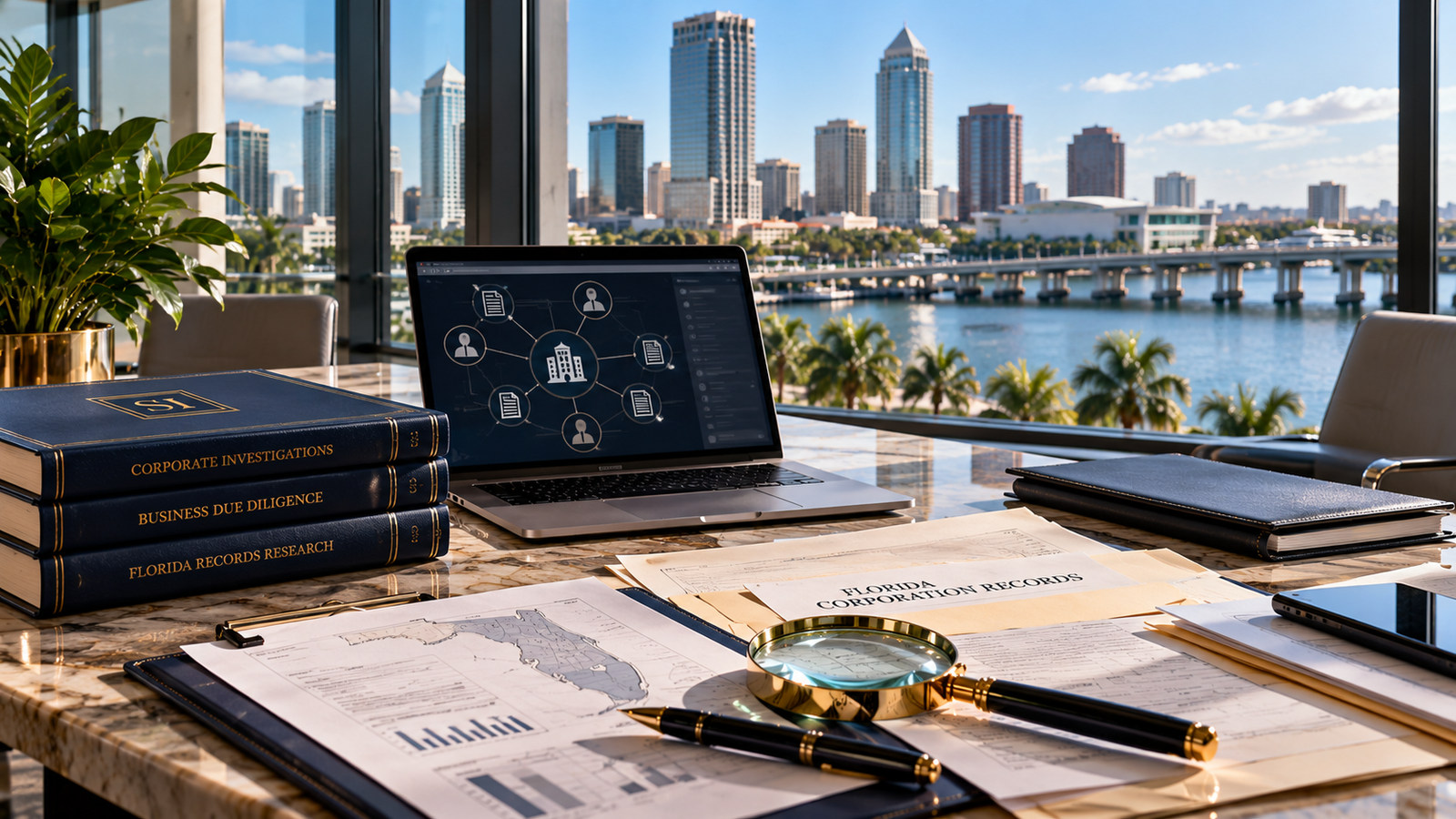
A useful first meeting with a private investigator is not a dramatic reveal. It is a careful discussion of what you know, what remains unverified, what can lawfully be investigated, and what a realistic assignment would produce.
Start with a decision, not a suspicion
Before collecting documents, write down the decision you need to make. Are you evaluating a potential business partner, trying to locate a missing beneficiary, checking a prospective household employee, or documenting an issue for counsel? The desired decision determines which facts matter. A broad instruction to “find everything” can waste time and produce material that does not answer the client's question. For a Naples business transaction, for example, verifying the identity and business history of a counterparty may be more useful than collecting unrelated personal details. State the question in one sentence and list two or three specific outcomes that would help you answer it.
Create a dated timeline of what you actually observed
Prepare a chronology with dates, approximate times, locations, people involved and the source of each fact. Mark direct observations separately from statements someone else made and from your own inferences. Include gaps and uncertainty rather than filling them with guesses. A photograph dated by your phone, a contract signed on a known day and a text received at a specific time are different forms of evidence. For a property or vendor dispute in Collier County, a dated timeline may help distinguish events before and after a service visit. Do not alter screenshots or reconstruct messages from memory when the originals still exist.
Bring records you are entitled to share
Useful materials may include contracts, invoices, business correspondence, public-record references, lawful photographs, receipts, relevant emails and written authorizations. If you have account records or identification documents, ask how the agency secures and limits access to them before sending copies. Do not obtain someone else's private account credentials, intercept communications, enter a restricted property, or use a workplace database without authority. A licensed investigator is not a shortcut around privacy laws. When a lawyer is involved, coordinate document transfer and preservation through counsel where appropriate.
Preserve originals and record where copies came from
Keep original digital files in their native format when possible. A screenshot can be useful, but it may omit context, metadata or preceding messages. Note when you downloaded a file, who provided it, and whether it was edited or compressed. Save copies in a controlled folder, with clear filenames and a simple index. Avoid posting sensitive records in a public group to crowdsource theories. If a matter could become litigation, ask your attorney about preservation duties and appropriate collection methods. Investigators can organize facts, but evidentiary admissibility is a separate legal question.
Identify the people and places relevant to the assignment
Provide accurate names, known business names, relevant addresses, aliases that are supported by records and contact information you lawfully possess. Explain why each person or place matters. Naples and surrounding communities can have similar street names, gated properties and seasonal mailing addresses; an outdated address should not be treated as a current residence without corroboration. A business entity may use a registered agent address rather than its operating location. Distinguishing these details early reduces mistaken identity and unnecessary fieldwork.
Explain urgency without asking for a predetermined answer
Tell the investigator about legitimate deadlines, such as a pending closing, a scheduled hearing, a contract contingency or an imminent hiring decision. A deadline affects scope and prioritization; it does not justify skipping verification. Be candid about facts that contradict your initial theory. A credible report may conclude that a claim is unsubstantiated or that records do not support a confident match. No ethical investigator can promise to find wrongdoing, identify every asset, or guarantee a particular legal result.
Ask about scope, deliverables and licensing
Request a written scope describing the questions being investigated, the proposed methods, the likely report format, anticipated costs and how changes will be authorized. Ask who will handle the case, whether the agency is properly licensed in Florida, and how confidential information will be stored. Florida private investigative agencies and investigators are regulated under Chapter 493 of the Florida Statutes. Verify current license information through the Florida Department of Agriculture and Consumer Services rather than relying only on marketing claims. Clarify whether the assignment calls for document research, interviews, public records or lawful field observation.
Know when another professional should lead
A private investigator researches and documents facts; a lawyer interprets legal rights and litigation strategy, a licensed accountant addresses accounting opinions, and law enforcement handles emergencies or suspected immediate threats. Some assignments need coordination among professionals. For a dispute over business ownership, the investigator might trace filings and identify conflicting addresses while counsel evaluates the legal consequences. For a potential financial fraud, preserve relevant records and consider reporting through appropriate authorities. Never delay an emergency response to wait for a private investigation.
What a Naples-focused investigation can reasonably deliver
A well-defined project may yield a chronology, source-linked findings, documented inconsistencies, verified business or property records, and a clear description of what could not be established. It should separate confirmed information from unresolved leads. Spyglass Investigations provides optional due diligence and identity and background research for clients in Naples and surrounding Southwest Florida communities. See also our guide to when a Naples PI may help and the investor verification checklist. Begin at our Naples private investigator homepage for service information.
A practical preparation checklist
Before the call, assemble a one-page objective, a timeline, a short list of relevant people and entities, copies of records you are authorized to share, your deadline, and the questions you want answered. Label uncertainty. Ask how sensitive information should be transmitted. That preparation lets the investigator assess feasibility and limits without asking you to disclose unrelated personal details. The goal is not to build the biggest file; it is to establish a lawful, proportionate research plan that can inform a real decision.
By Spyglass Investigations · Naples, Florida · November 8, 2026