Finding a listing is not the same as proving a claim
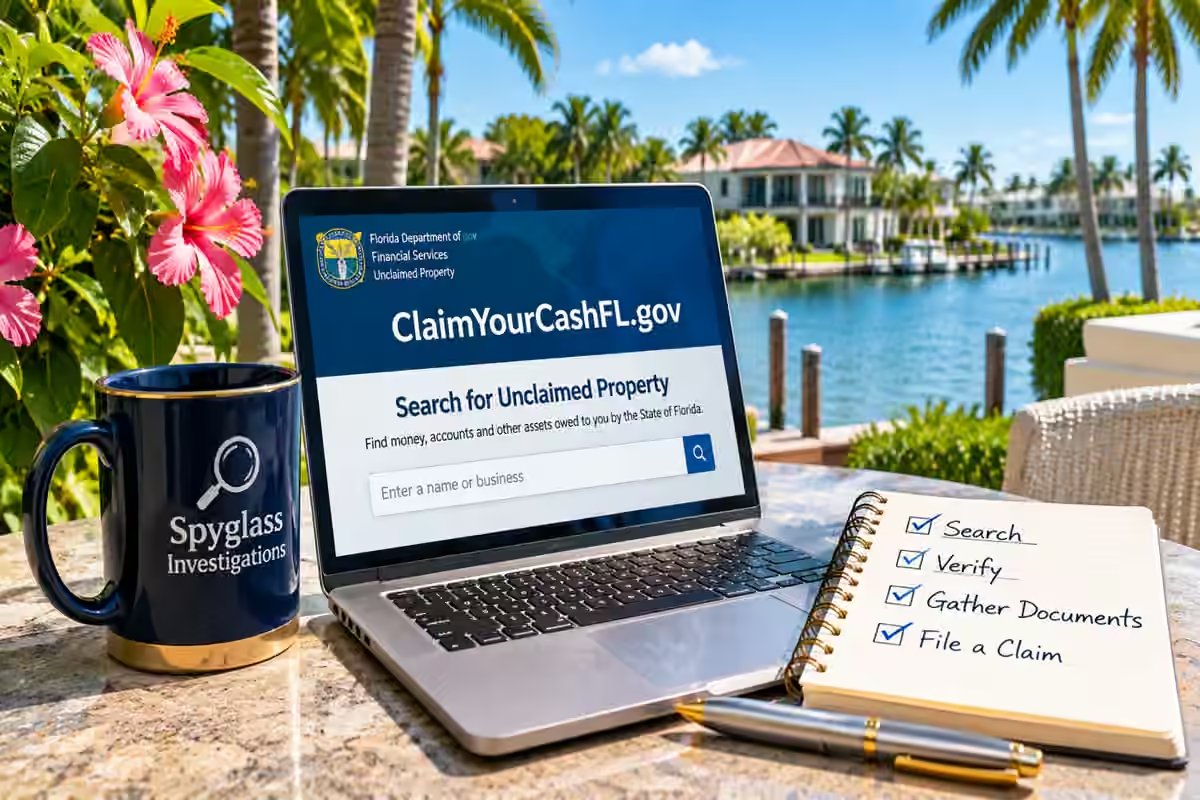
Florida's unclaimed-property program holds assets that businesses and other holders have reported and transferred to the state after the required dormancy process. A name match in a public search is a lead, not proof that a particular person owns the money. A claimant may need to show identity, a relationship to the reported owner and a connection to the account or old address. The official Florida search and direct claim process are free at ClaimYourCashFL.gov. You do not need to hire a company to search or submit a direct claim.
Start with your current identity documents
A government-issued photo ID can help establish your present legal identity. The state may request additional materials depending on the property type, owner information and the claim's circumstances. Make sure documents are legible, current where required and consistent with the name used in the claim. Do not send a Social Security number, identity image or bank information to someone who contacts you unexpectedly without independently verifying the recipient and secure submission channel. Requirements should be taken from the official claim instructions for your specific record, not from a generic online checklist.
Why an old mailing address can matter
An unclaimed account might have been reported using an address from years earlier. Someone who lived in Naples, Bonita Springs or another Florida city may now reside elsewhere, but still be the rightful owner. Historical leases, utility bills, mortgage statements, insurance documents, tax records or dated correspondence may help connect a person to a former address, depending on the state's request. A current driver's license usually shows where you live now, not necessarily where the account was opened. Keep dates visible and avoid altering documents to make an address appear more recent.
What if your name has changed?
Marriage, divorce, adoption, spelling differences, initials or business-name changes can create a mismatch between the listing and your current identification. Depending on the situation, certified marriage or court records, former IDs, corporate filings or other lawful documentation may help establish the connection. Do not assume that two similar names refer to the same person. A private investigator can organize public records and help trace name changes, but cannot guarantee that the state will accept a particular document or decide ownership.
Try to identify the original account or holder
A claim may relate to an uncashed payroll check, insurance proceeds, an old bank account, a utility deposit, a security, a business payment or another asset category. The holder's name, account number fragments, approximate dates and related paperwork may help explain why the property belongs to you. Preserve original bank statements, pay stubs, policies, correspondence and account notices when available. Avoid guessing at an account number or inventing a connection. If you contact the original holder, use its verified customer-service channel and ask what historical records it can lawfully provide.
When the owner is deceased
A family member may discover property listed in a deceased parent's or relative's name. A death certificate alone may not establish who has authority to claim the asset. The state may need estate, probate, beneficiary or heirship documentation, depending on the account and governing rules. A surviving spouse, child, personal representative and named beneficiary do not necessarily have identical rights. See our separate guide to claims for a deceased parent for more context, and seek qualified legal advice when ownership or estate authority is disputed.
Multiple accounts require a careful inventory
One owner may have several reported accounts, sometimes under different address histories or name variants. Create a private worksheet showing each state property identifier, reported owner name, holder, address and any available amount or asset type. Preserve each account separately until ownership is supported. A matching surname, city or street alone is not enough to combine unrelated owners. If a representative assists with several accounts, the written scope should identify exactly which properties are included, and the claimant should understand any lawful fee arrangement before signing.
Why the state may request more information
An additional-document request is not necessarily a denial. It may reflect an incomplete identity link, a former address, an estate question, a business owner mismatch or other evidence gap. Read the exact state notice and respond through the official claim channel. Keep copies of submitted materials and a dated record of communications. Do not rely on a third party's promise of a fixed payout date. The state evaluates the claim under its rules, and processing can vary based on complexity and completeness.
Verify letters from private recovery companies
A private claimant representative is not the Florida Department of Financial Services. If you receive a recovery letter, independently search the official state website and verify the sender's identity and claimed registration or credentials. Review the written agreement, fees, account identifiers and any request for personal information. Do not pay an unsolicited upfront charge merely to search the state database. Spyglass Investigations is a Florida-licensed private investigative agency that offers optional unclaimed-property research and recovery assistance; claimants remain free to use the state process themselves.
A practical checklist before submitting
Confirm the listing through the official Florida site. Match the owner name and historical details without relying solely on a common name. Gather current ID and only the supporting records actually requested. Preserve the original records and submit through a verified secure channel. Record claim numbers and dates; respond to state requests rather than opening duplicate submissions unnecessarily. If records are missing, identify which factual link needs evidence and consider lawful public-record research. Spyglass also provides identity and document due diligence. For the basic search process, see our free Florida unclaimed-money search guide.
Frequently asked questions
Can I claim with only a name match? A match alone may not satisfy the state's proof requirements. Does my current address have to match? Not always; the state may ask for evidence of an earlier address. Can I submit a photograph of a document? Follow the specific official instructions for format, legibility and certification. Is a private representative required? No. Filing directly with the state is free. Can an investigator obtain confidential account records? Only through lawful, authorized means; investigators cannot bypass protected-record access rules.
Verify the facts before making a decision
Spyglass Investigations is a Florida-licensed private investigation agency based in Naples, serving clients throughout Florida. We provide lawful records research and due diligence, not legal or tax advice.
Naples private investigator servicesConfidential consultationMore investigative insights