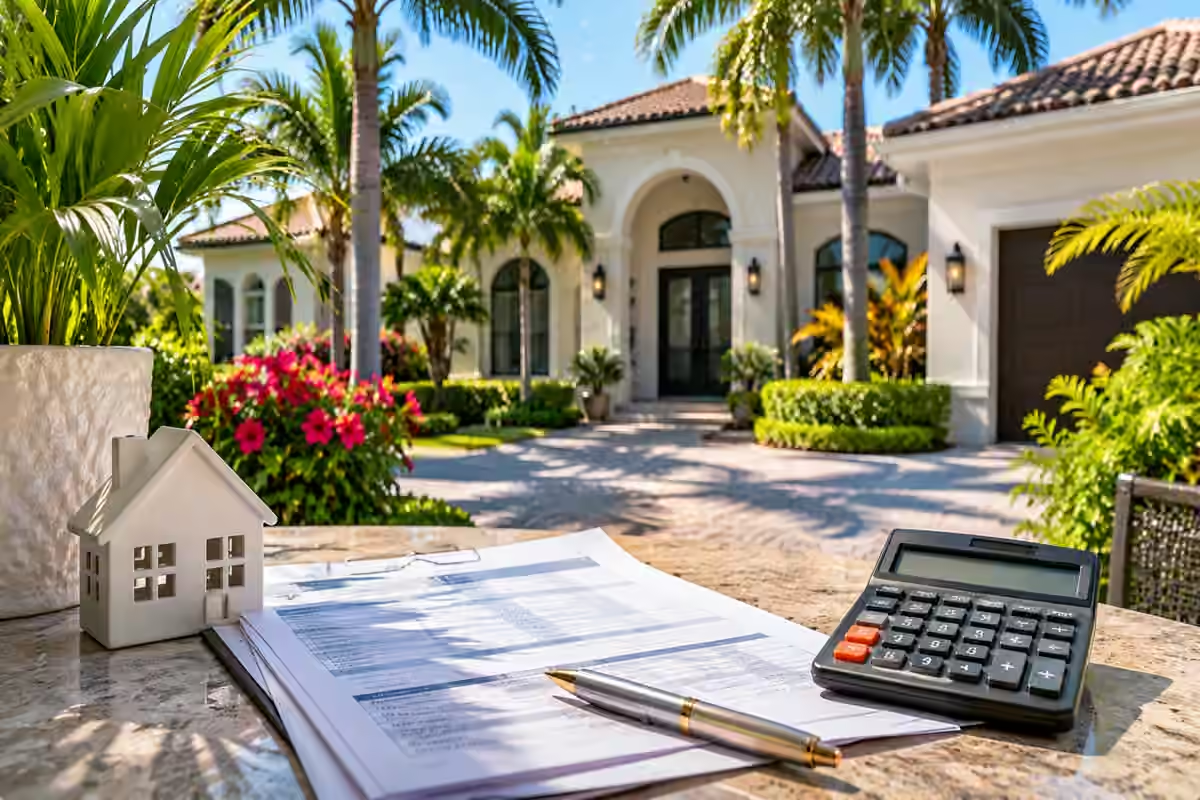
Florida voters approved Amendment 3—but not the end of property taxes
On November 3, 2026, Florida voters approved Amendment 3 with approximately 62% support in unofficial election returns, exceeding the 60% constitutional threshold. The measure changes the homestead exemption for non-school property taxes, reduces the assessment-growth cap for non-homestead property and adds residency and local-government provisions. Its effective date is January 1, 2027. The most important clarification is that Florida did not eliminate all property taxes. Homeowners may save money, but school taxes and other applicable charges remain. The official ballot language is summarized by the Florida Chamber's Amendment 3 information page; readers should monitor implementation by the state.
What changes for an existing Florida homestead?
A qualifying permanent Florida residence generally receives a homestead exemption. Under the previous structure, the combined exemption for many non-school levies was up to $50,000 of assessed value; school levies generally benefited from the first $25,000 exemption. Amendment 3 increases the non-school homestead exemption to $150,000 for 2027 and $250,000 for 2028, with inflation adjustments thereafter. These figures refer to assessed value shielded from specified taxes, not checks mailed to homeowners. The exemption cannot reduce a property's taxable value below zero. Details of implementing legislation, local millage and individual eligibility can affect actual bills.
Example: a home assessed at $500,000
Suppose a Naples homestead has an assessed value of $500,000, no other relevant exemptions and unchanged non-school millage. Under the former $50,000 non-school exemption, its illustrative taxable value for those levies is $450,000. With a $150,000 exemption in 2027, it would be $350,000. With a $250,000 exemption in 2028, it would be $250,000. At a hypothetical 10-mill non-school rate, the difference between $450,000 and $250,000 corresponds to $2,000 in annual tax. That is only an illustration, not a prediction for a particular parcel: actual assessed values, tax districts, rates and additional exemptions vary.
School property taxes are still collected
Florida property-tax bills combine levies from different taxing authorities. The larger Amendment 3 homestead exemption applies to non-school property taxes. It does not turn the school district portion into zero. A homeowner who sees a major reduction in county or municipal taxable value may still have a school-tax obligation. Also, a home's market value or listing price is not its assessed value. To estimate a real bill, review the property appraiser's just value, assessed value, taxable values by taxing authority and millage rates. The Florida Department of Revenue property-tax resources explain these distinct concepts.
Does Save Our Homes disappear?
No. Save Our Homes is a separate protection for eligible homestead assessments: annual assessed-value growth is generally limited to the lower of 3% or the relevant inflation measure, subject to applicable rules and changes in ownership or improvements. Amendment 3's larger exemption operates after assessment calculations. It does not mean market values are frozen, and it does not eliminate reassessment rules when a property changes hands. For a longtime Collier County owner, a low capped assessed value and a larger exemption can work together. A new buyer should not assume the seller's taxable value will transfer unchanged.
What about vacation homes, rentals and commercial property?
These properties generally cannot claim the homestead exemption unless a qualifying portion is actually an owner's permanent residence. Amendment 3 nevertheless reduces the annual cap on increases in assessed value for qualifying non-homestead properties from 10% to 5% for non-school levies beginning in 2027. That is a limit on certain assessment increases, not a guarantee that the entire tax bill can rise only 5%. School-tax treatment, millage changes, reassessment after transfers and property improvements can change the result. Naples snowbirds, landlords and investors should distinguish the property classification from their mailing address.
New Florida residents face a different timetable
The ballot measure distinguishes people who were Florida residents on December 31, 2026, from those who were not. A person who was not a Florida resident on that date may qualify for the existing homestead exemption upon meeting the normal requirements, but the increased exemption generally begins in the fifth year of homestead exemption, subject to constitutional limitations. This is not a five-year wait for every form of homestead relief. Counties and municipalities may have authority to shorten the waiting period for their respective levies through the specified voting process. Residency documentation and the property's actual use matter; consult the local property appraiser before assuming eligibility.
Will county and city services change?
Amendment 3 also addresses how counties and municipalities use property-tax revenue, listing purposes such as public safety, education, infrastructure, natural resources, debt service, employee retirement and government operations, while allowing certain other expenditures if appropriately approved and not prohibited by law. Supporters expect meaningful relief for households and some investors. Critics warn that reduced revenue could strain local budgets or shift costs. Neither future service reductions nor fixed millage rates can be assumed today. The Legislature and local governments still have implementation and budgeting decisions ahead.
When will the change appear—and what should you do?
The amendment does not retroactively cancel a 2026 tax bill. Its stated effective date is January 1, 2027, with the first exemption increase applying to the 2027 tax roll and the larger increase to 2028. Confirm the property's homestead status, check assessed versus market value, review school and non-school levies separately and retain documentation of residency if relevant. For a recently purchased or inherited home, ask the county property appraiser how reassessment and exemptions apply. Spyglass Investigations provides property due diligence and public-record research, not tax assessment decisions or legal opinions. For ownership-record questions, read our Collier County deed-record guide.
Frequently asked questions
Will my property taxes be zero? Not necessarily; school levies and other charges can remain. Does a $250,000 exemption mean a $250,000 refund? No; it reduces taxable assessed value. Does my second home receive the larger exemption? Generally no, unless it independently qualifies as a homestead. Does the new 5% rule cap my total bill? No, it concerns qualifying non-school assessed-value increases. Are the election results final? The approximately 62% figure reflects reported unofficial results as of November 5; formal certification is a separate process. See the ballot-language overview and official state and county guidance for updates.
Verify the facts before making a decision
Spyglass Investigations is a Florida-licensed private investigation agency based in Naples, serving clients throughout Florida. We provide lawful records research and due diligence, not legal or tax advice.
Naples private investigator servicesConfidential consultationMore investigative insights